Global Clean Energy Intelligence Edition
GCES PORTAL
Global Clean Energy Systems Intelligence
Are AC EV chargers sufficient for overnight fleet charging?
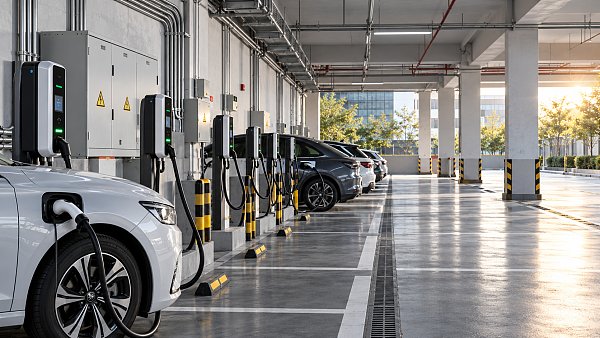
At a fleet depot, charging success is measured at the morning dispatch gate—not by how many charging points were installed. Vehicles need enough energy for their assigned routes, with a sensible reserve, before drivers arrive. A yard full of illuminated charging indicators is little comfort if several vans are still short of range.
AC EV Chargers are often sufficient for overnight fleet charging when daily energy demand fits within each vehicle’s usable parking window and the depot’s available electrical capacity. They are not automatically sufficient for high-mileage vehicles, short turnaround periods, or vehicles with limited AC charging capability. For project managers and engineering leads, the decision should begin with route and dwell-time data, not charger nameplate ratings.
Start with energy owed by departure time
Battery size is not the same as nightly charging demand. A vehicle with a large battery may need only a modest top-up after a short route. Conversely, a smaller vehicle completing two shifts may return nearly depleted and have little time to recover.
For each vehicle or representative duty group, establish:
- Daily battery energy use: derived from telematics where available, including seasonal heating, cooling, payload, and route effects.
- Required departure energy: enough for the next assignment plus an operational reserve, rather than automatically charging every battery to 100%.
- Actual connection window: the interval between plugging in and required departure, excluding washing, inspection, loading, and vehicle movements.
- AC acceptance limit: the vehicle’s onboard charger rating and any temperature- or state-of-charge-related restrictions.
- Exceptions: late returns, early departures, unexpected route extensions, and missed plug-ins.
A useful first calculation is:
Required average grid power per vehicle = battery energy to replenish ÷ charging efficiency ÷ available charging hours.
Efficiency here means electricity delivered from the AC supply to stored battery energy. Use measured or vehicle-specific values where possible; charging losses and auxiliary consumption vary with power level and conditions. If energy demand is already measured at the AC meter, do not add charging losses again.
The calculation is a screening tool, not a final design. Averages can conceal the exact vehicle that must leave earliest.
What the rating on an AC charger actually tells you
With AC charging, the vehicle’s onboard charger converts alternating current into the direct current stored in its battery. The charge point supplies and controls the AC connection; it does not determine the vehicle’s conversion capability.
Consequently, a higher-rated charge point does not necessarily charge a vehicle faster. A vehicle limited to 7.4 kW AC will not accept 22 kW simply because it is connected to a 22 kW unit. Available power is constrained by the lowest applicable limit across the charge point, vehicle, wiring, supply, and load-management settings.
In markets using common European-style three-phase configurations, 11 kW and 22 kW AC equipment is widely encountered, while approximately 7.4 kW is associated with a 32 A single-phase supply at nominal 230 V. Other markets use different voltages, circuit arrangements, and power ratings. These are electrical configurations—not interchangeable procurement specifications.
Check compatibility against the exact vehicle variant and destination market. Confirm connector type, phase support, onboard charger options, and whether the advertised charge-point rating applies per connector or is shared between outlets.
A depot example: enough energy overall, but not for every vehicle
Consider a hypothetical depot with 40 vans. Each needs 36 kWh replenished into its battery overnight. Assuming 90% AC-to-battery efficiency solely for this example, each requires 40 kWh from the supply.
If 180 kW remains available for charging throughout that window, the aggregate energy calculation passes, but the margin is modest. Forty 11 kW charge points have a combined nameplate rating of 440 kW; they do not need to draw that power simultaneously if charging is scheduled effectively.
Now consider a late-returning van with only four hours before departure. It needs an average of 10 kW from the supply to receive its 40 kWh. An 11 kW-capable vehicle may fit that window under suitable conditions; a vehicle limited to 7.4 kW cannot. Installing a larger AC charge point will not remove that onboard limit.
This is why an overnight fleet charging assessment needs two separate tests: can the depot deliver the total energy, and can every vehicle receive its share before its own deadline?

Load management makes AC viable—but cannot manufacture capacity
Unmanaged charging can create a sharp demand peak as vehicles return together. Dynamic load management can instead allocate power within a site limit, responding to building consumption and prioritizing vehicles with earlier departures or larger energy deficits.
For a fleet, simply dividing power equally is often inadequate. A nearly ready vehicle leaving at 09:00 should not necessarily receive the same allocation as a depleted vehicle leaving at 05:00. Procurement specifications should define departure priorities, minimum energy targets, and the behavior expected when the schedule becomes infeasible.
The underlying constraint remains:
Energy available for charging = the total charging power available across the usable parking period.
If other site loads reduce charging capacity during the night, the model must reflect those intervals. A nominal connection rating is not evidence that the same power is continuously available to the fleet. Transformer capacity, feeder limits, phase balance, other equipment, and utility restrictions all matter.
Ask designers to simulate realistic arrival and departure profiles, including a high-demand operating day and a credible equipment outage. Where the system depends on vehicle state-of-charge data, verify that the proposed vehicles and software actually provide it. AC connection alone does not guarantee access to reliable battery data.
Communications failures deserve equal attention. A controller should have a defined fallback that protects the site connection without unnecessarily stopping the whole depot. Specify local operating behavior during internet loss, backend outages, and meter faults.
Where DC charging earns its place
AC charging is a strong candidate for fleets with predictable routes, long parking periods, and moderate daily energy requirements. DC becomes more compelling when vehicles need substantial energy during short stops or cannot meet departure targets through their onboard AC chargers.
A mixed depot often makes more operational sense than an all-AC or all-DC design.
A shared DC charger can provide recovery capacity for exceptions. However, it must have an operating plan: who gets priority, who moves vehicles, and what happens when several exceptions occur together? An emergency charger that is routinely occupied may offer little resilience.
DC equipment also cannot bypass a constrained grid connection. It can concentrate energy delivery into a shorter interval, but the site must supply that power. Battery storage may help manage peaks or temporary constraints, yet adds conversion losses, controls, space requirements, degradation, and safety considerations. Depot solar should likewise be assessed against actual generation and charging schedules; overnight vehicles cannot directly consume midday generation without storage or a different operating pattern.
Procure a working depot, not a collection of charge points
The equipment quotation is only part of the project. Civil works, distribution upgrades, utility connection arrangements, software integration, and commissioning can determine both delivery time and lifetime cost.
Define the electrical and safety boundary
Confirm the available supply with the utility and responsible electrical designer before freezing charger quantities. Assess switchgear, transformers, cable routes, protection coordination, earthing, applicable residual-current and DC leakage protection, and outdoor exposure. Parking layouts also need safe cable reach, impact protection, accessible isolation, drainage, and separation from vehicle circulation.
Standards and approvals are jurisdiction-specific. Tender documents should identify the applicable national requirements, adopted editions, and utility rules at the procurement date rather than relying on a generic claim of international compliance.
Make interoperability testable
Request the specific functions supported by the charge point, management platform, and fleet software—not merely a protocol logo. Open Charge Point Protocol support, for example, does not by itself prove that a particular scheduling feature or cross-vendor integration works.
Acceptance testing should include representative vehicles, constrained-power operation, delayed arrivals, communications loss, and recovery after a power interruption. Verify session records, meter data, alarms, and export access. Clarify ownership of operational data and the cost of changing software providers.
Match evidence to the claim
A demonstration, an awarded contract, and an operating fleet installation provide different levels of evidence. When reviewing supplier references, ask whether the cited depot is commissioned, how many vehicles charge there, and whether its duty cycle resembles yours. Where available, examine measured departure readiness and fault records rather than installed connector counts alone.
Compare lifetime cost against departure readiness
AC equipment often has a lower purchase cost per charging point than DC equipment, but the meaningful comparison is the cost of meeting fleet requirements over the project life.
Include installation, grid upgrades, energy purchases, applicable demand or capacity charges, software subscriptions, maintenance, inspections, replacement parts, and operational labor. Cheap off-peak electricity is useful only if the tariff window overlaps with sufficient charging time. Any tariff or incentive assumption should state its jurisdiction, effective date, eligibility conditions, and expected duration.
Reliability has a cost too. One connector per parking position can reduce vehicle-moving labor and missed connections, while shared charging may reduce equipment expenditure but introduce overnight shunting. Spare connectors provide flexibility, although they do not replace a failed feeder or central controller.
For procurement, translate reliability into measurable requirements: departure energy targets, fault response, spare-parts availability, and operation during failures. Charger uptime alone does not show whether vehicles are ready for work.
The decision is therefore conditional, but practical: choose AC EV Chargers as the overnight backbone when both vehicle-level charging windows and depot-level energy capacity pass realistic stress tests. Add targeted DC capacity where short turnarounds or AC acceptance limits create genuine gaps. Before committing capital, require a charging schedule tied to the actual fleet, confirmed electrical constraints, and a clear plan for the nights that do not go as expected.
Related News
 Fleet & Depot ChargingCan load management add EV chargers without a service upgrade?Add EV Chargers without a costly service upgrade. Discover how load management, capacity checks, and smart controls can meet charging needs and when an upgrade is necessary.MORE+
 Fleet & Depot ChargingAre AC EV chargers sufficient for overnight fleet charging?Are AC EV Chargers enough for overnight fleet charging? Discover how energy demand, parking windows, and smart load management affect departure readiness—and when to add DC backup.MORE+