Global Clean Energy Intelligence Edition
GCES PORTAL
Global Clean Energy Systems Intelligence
How Do Battery Separators Affect Lithium-Ion Battery Performance?
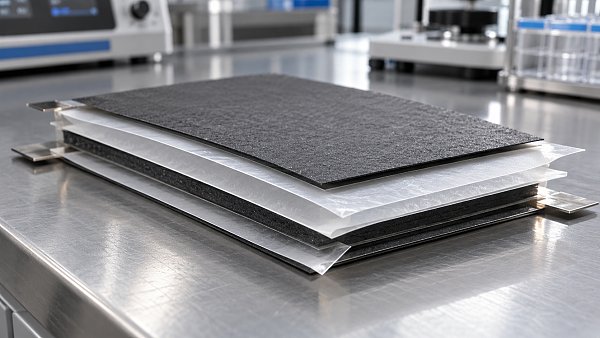
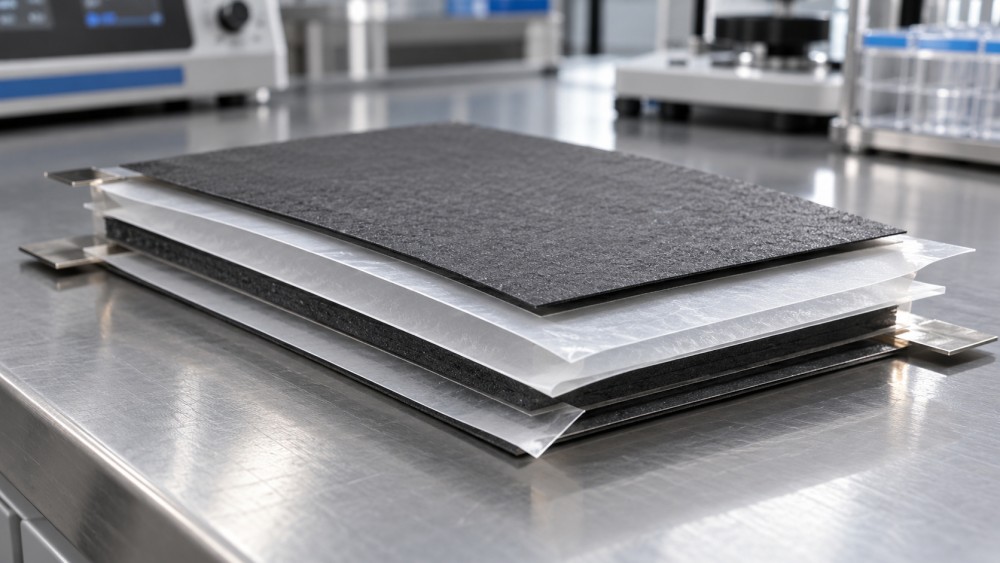
Battery separators affect how much power a lithium-ion cell can deliver, how efficiently it charges, how quickly it ages, and how it responds to internal damage or overheating. Their influence comes from a difficult combination of duties: they must keep the electrodes physically separated while allowing lithium ions to move through electrolyte-filled pores with limited resistance.
For technical evaluators, the useful question is whether a separator maintains that balance throughout the cell’s intended operating life. A thinner membrane can improve energy density and reduce ionic resistance, but its value depends on mechanical integrity, manufacturing consistency, and behavior under heat and pressure. Higher porosity can support ion transport, yet offers little benefit if the pores wet poorly or collapse under compression. No single separator specification establishes cell performance or safety.
How pore structure affects power, charging, and efficiency
In a conventional lithium-ion cell, the separator conducts ions through the liquid electrolyte held within its pores. Its contribution to resistance depends on thickness, the fraction of accessible pore volume, the connectivity of the pores, and the conductivity of the electrolyte. Tortuosity describes how indirect those pathways are: a highly winding route makes ion transport more difficult even when total porosity appears favorable.
For otherwise comparable structures, reducing thickness shortens the transport path. Increasing accessible porosity or reducing tortuosity can also lower ionic resistance. These changes can reduce voltage losses under load and the separator’s contribution to resistive heating. They become particularly relevant during high-power discharge and rapid charging, when ion transport must support a larger current.
However, a separator’s resistance is only one part of the cell’s overall impedance. Electrode thickness, electrode pore structure, electrolyte composition, interfaces, temperature, and state of charge also affect performance. A substantial improvement measured on an isolated separator may produce a smaller improvement in a cell whose limiting resistance lies elsewhere.
Electrolyte wettability deserves equal attention. A membrane with favorable dry porosity can still perform poorly if electrolyte penetrates it slowly or leaves incompletely wetted regions. Uneven wetting can produce uneven local resistance and current distribution. Surface treatments and ceramic coatings can improve electrolyte affinity, but their effect depends on the coating formulation, pore structure, and compatibility with the chosen electrolyte.
During fast charging, restricted or uneven ion transport can contribute to conditions that favor lithium plating on the negative electrode. The separator participates in that risk, but it does not determine it alone. Anode design, charging current, temperature, state of charge, and aging condition must be considered together. A claim that a separator “enables fast charging” therefore needs supporting cell data under a defined charging protocol, including evidence about degradation and plating.
For stationary storage, lower resistance may improve efficiency and reduce heat generation during demanding dispatch. The benefit will depend on duty cycle. A system operating at modest current for long durations may gain less from a separator resistance improvement than an EV cell repeatedly exposed to high charging power. Comparisons should use the intended operating profile rather than a supplier’s most favorable test condition.
Thickness and strength influence energy density and lifetime together
The separator occupies space without directly storing charge. Reducing its thickness can free internal volume for active material and improve cell-level volumetric energy density, provided the cell design uses that space effectively. The gain cannot be inferred from separator thickness alone: electrode dimensions, packaging, electrolyte quantity, and other inactive components remain part of the calculation.
Mechanical margins can narrow as a membrane becomes thinner. During coating, slitting, winding, stacking, and assembly, the separator must tolerate handling stresses and remain free of damaging defects. In service, it must continue separating electrodes as they expand, contract, and develop uneven local pressure. Electrode burrs, particles, wrinkles, or misalignment can concentrate stress in a small area.
Puncture strength, tensile strength, elongation, and dimensional consistency describe different aspects of this behavior. A strong tensile result does not establish resistance to a sharp particle. Properties can also differ between the machine and transverse directions because processing creates directional structure. Comparing a single strength figure without its test method and orientation can therefore be misleading.
Pressure introduces another trade-off. Compression helps maintain contact within a cell, but excessive or uneven pressure can deform the separator and alter its pores. That can increase ionic resistance even if the membrane remains electrically insulating. Evaluating a separator only in an uncompressed state may miss behavior relevant to tightly constrained cell assemblies.
Long-term performance also depends on chemical and electrochemical compatibility. The separator and its coating must retain useful properties while exposed to electrolyte, electrode potentials, elevated temperature, and reaction products. Changes in surface chemistry, deposits within pores, or deterioration of a coating can affect transport and mechanical integrity. Fresh-film measurements cannot establish how those properties will evolve over years of service.
These mechanisms make cycle-life claims difficult to attribute. If a cell with a new separator retains more capacity, the comparison should control electrode loading, electrolyte formulation and quantity, formation, pressure, and cycling conditions. Otherwise, the improvement may reflect several design changes. Useful evidence includes capacity retention alongside impedance growth, efficiency, and examination of aged cells for damage or uneven degradation.
Thermal shutdown and dimensional stability provide different protections
Polyethylene, polypropylene, multilayer polyolefin structures, and coated membranes offer different combinations of transport, mechanical, and thermal properties. Material identity helps explain likely behavior, but it cannot substitute for measurements on the finished separator. Processing, layer structure, coating composition, and thickness all affect the result.
Some separator designs provide thermal shutdown: heating changes the polymer structure and closes pores, sharply increasing ionic resistance. This can interrupt normal electrochemical current if shutdown occurs uniformly and the separator remains physically intact. Multilayer designs may combine a layer intended to close its pores with another that retains mechanical support over a higher temperature range.
Shutdown is conditional protection. It does not guarantee that every internal short circuit stops, particularly where a direct electronic path already exists. Nor does it necessarily halt self-heating reactions that have become established elsewhere in the cell. Continued heating may eventually cause shrinkage, rupture, or loss of separation between electrodes.
Thermal dimensional stability addresses a different question: whether the membrane maintains sufficient coverage of the electrodes as temperature rises. Shrinkage can expose opposing electrode surfaces even when the original membrane had adequate strength. Ceramic coatings can improve dimensional stability and resistance to local mechanical damage, but the outcome depends on coating adhesion, uniformity, binder behavior, and the integrity of the underlying structure.
For this reason, “ceramic-coated” should be treated as a construction description rather than a safety rating. A coating can also introduce trade-offs in thickness, mass, flexibility, or resistance. Its benefit must be assessed in the finished cell, including after manufacturing and aging have challenged the coating’s integrity.
Thermal data require particularly careful reading. Free-shrinkage measurements on an unconstrained film answer a different question from measurements made under restraint or pressure. A dry-film test may not reproduce behavior after electrolyte exposure. Heating rate, hold time, specimen orientation, and the definition of failure can all change the interpretation. A quoted shutdown temperature without information about subsequent shrinkage or loss of integrity gives an incomplete picture.
At system level, separator performance contributes to reducing the likelihood of an initiating cell failure. Cooling, electrical protection, cell spacing, venting, and propagation controls address additional failure pathways. Even a separator with strong thermal performance cannot establish the fire behavior of a complete battery installation.
What evidence makes a separator claim useful for cell selection?
A practical assessment connects material measurements to cell behavior and then to the intended duty. Material data explain mechanisms and manufacturing tolerances. Cell tests show whether those characteristics deliver a benefit in a particular electrochemical design. Application testing establishes whether the benefit survives the temperatures, charging limits, pressure conditions, and aging demands of the intended service.
Supplier comparisons become more useful when the following information is available:
- Transport under relevant conditions: electrolyte-wetted resistance with the electrolyte, temperature, compression, and measurement method identified. Air permeability can help characterize manufacturing consistency, but it does not directly establish ionic conductivity.
- Mechanical performance and variability: thickness distribution, puncture resistance, directional tensile properties, and defect-control information. Average values should be accompanied by tolerances or distributions where available.
- Thermal behavior: shrinkage conditions, shutdown response where applicable, and the point at which electrical isolation or physical integrity is lost.
- Compatibility after aging: evidence that electrolyte exposure and relevant thermal and electrochemical conditions do not cause unacceptable changes in resistance, dimensions, or strength.
- Controlled cell comparisons: power, charging, efficiency, degradation, and safety results from cells with clearly identified designs and operating conditions.
Standards help define repeatable assessments, but their scope must match the claim. IEC 62619 addresses safety requirements for industrial secondary lithium cells and batteries, while the IEC 62660 series covers lithium-ion cells for propulsion applications. UN 38.3 addresses transport testing. These frameworks assess specified cells or batteries under defined conditions; they do not provide a universal separator performance grade.
A separator datasheet consequently cannot establish that a finished cell complies with an application standard. Likewise, a cell passing a prescribed safety test does not isolate the separator’s contribution or demonstrate lifetime performance across every operating condition. Evaluators should identify the tested cell construction, applicable standard and edition, test conditions, and relevance to the proposed use.
For an EV program, the decisive evidence may involve charging at low temperature, repeated high-power operation, and mechanical integrity within the selected cell format. For a stationary storage project, resistance growth during sustained operation, temperature exposure, and retained isolation after aging may carry greater weight. Both require evidence from representative cells; neither can be resolved by ranking separator thickness or porosity alone.
A credible separator improvement should support a traceable chain of reasoning: a measured material change produces a demonstrated cell benefit under relevant conditions, while mechanical and thermal margins remain acceptable. If a supplier offers only a thinner membrane, a higher porosity figure, or a coating label, that chain is incomplete. The next decision should depend on the missing evidence—whether that is compressed-state resistance, aged-cell examination, or thermal integrity after shutdown—because that evidence determines whether the proposed improvement survives beyond the datasheet.
Global Energy Questions? Contact GCES Portal
Related News
 Cells & ModulesHow Do Battery Separators Affect Lithium-Ion Battery Performance?Battery Separators influence lithium-ion battery power, charging, lifespan, and safety. Discover key trade-offs and the evidence you need to make smarter cell selection decisions.MORE+
 Cells & ModulesTCL SunPower Launches Origin Residential Solar Modules With Up to 24.7% EfficiencyTCL SunPower Origin residential solar modules offer 485–505 W and up to 24.7% efficiency. Explore back-contact technology, shading resistance and a 40-year warranty for your roof.MORE+
 Cells & ModulesWhat solar panel hail test ratings mean for real-world protectionSolar Panels hail test ratings explained: learn what lab results reveal, spot hidden risks, and compare protection claims to make smarter buying decisions for your project.MORE+