Global Clean Energy Intelligence Edition
GCES PORTAL
Global Clean Energy Systems Intelligence
What Are the IEC 62271 Electrical Switchgear Requirements?
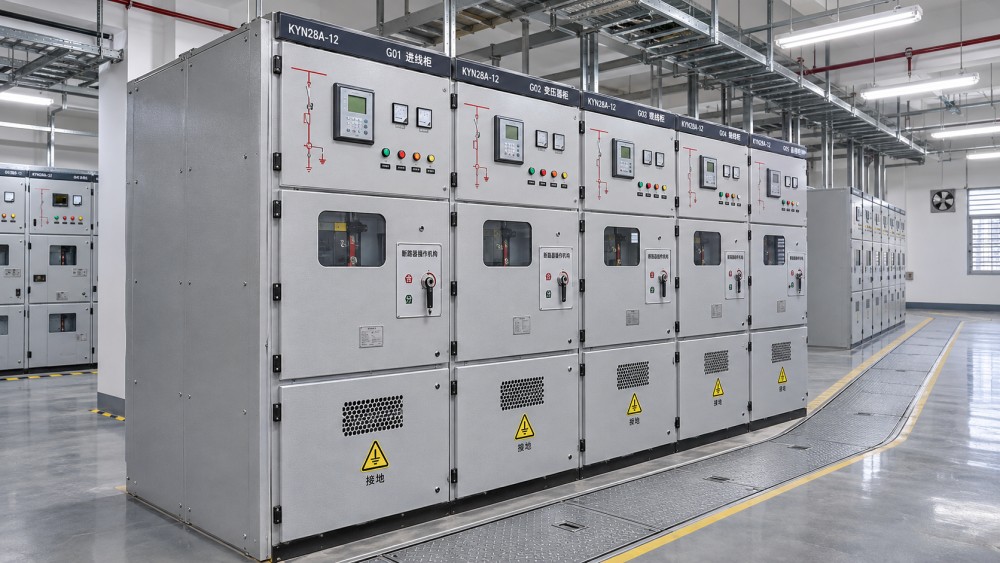
IEC 62271 electrical switchgear requirements depend on the equipment type, its rated characteristics and the conditions in which it will be installed. The series covers high-voltage switchgear and controlgear, generally for systems above 1 kV AC. An assessment normally starts with IEC 62271-1, the common specifications, and then applies the relevant product-specific part, such as IEC 62271-200 for AC metal-enclosed switchgear or IEC 62271-100 for AC circuit-breakers.
In a renewable energy substation or an energy storage connection, a supplier’s statement that equipment is “IEC 62271 compliant” is not enough to establish suitability. The evaluator must match the claimed standard editions, ratings, configuration and test evidence to the proposed network and installation. A mismatch can affect fault interruption, insulation performance, personnel safety or acceptance at commissioning.
Start with the applicable parts, not a general compliance claim
IEC 62271 is a series rather than a single certification. IEC 62271-1 supplies common requirements for many types of AC switchgear and controlgear, while product standards add or modify requirements for particular equipment. The applicable combination should be established from the equipment’s function and construction.
These examples are not an exhaustive list. A project may require other parts for switches, contactors or assembled substations. Confirm the scope, edition and amendments cited in the contract, and check that they are acceptable under local rules and the grid operator’s specifications. The word “high-voltage” in IEC terminology also covers equipment commonly called medium-voltage in project documents.
Component evidence and assembly evidence serve different purposes. A circuit-breaker tested to its product standard does not, by itself, establish that the complete metal-enclosed panel meets IEC 62271-200. Conversely, an assembly report should be checked for the actual switching device and configuration it covers.
Match ratings to the network duty
A technically credible bid identifies rated values on the equipment documentation and explains how they relate to the system study. At minimum, review rated voltage, frequency, normal current, insulation level and short-circuit capability. Do not select a panel solely because its rated voltage exceeds the nominal system voltage: the applicable highest system voltage and insulation coordination must also be considered.
Short-circuit withstand and interruption are separate checks. The assembly must tolerate the relevant short-time withstand current and peak withstand current for its specified duration, while each interrupting device must be suitable for the prospective current and the particular switching duty. Verify both the current magnitude and the time for which it may flow against the protection and fault-clearing study.
Switching duties can be decisive even when the basic fault rating appears adequate. Depending on the application, assess transformer energization, cable or line charging, capacitor-bank switching and the transient recovery voltage associated with the interruption. For inverter-based generation or storage connections, use the system study and manufacturer’s application limits rather than assuming that a generator connection behaves like a conventional source.
Ratings also depend on the complete assembly. A busbar’s stated current capability, for example, should be checked with the proposed enclosure, conductor arrangement and ambient conditions. A circuit-breaker with a suitable nominal current does not automatically resolve a thermal limitation elsewhere in the panel.
Service conditions can change the acceptable design
IEC 62271-1 defines normal service conditions and addresses the need to agree on special conditions. The project specification should identify site conditions before final equipment selection, not after the type-test documents arrive.
- Temperature and solar exposure: Check the specified ambient range and whether enclosure heating, ventilation or derating affects continuous current capability.
- Altitude: Confirm the effect on external insulation and cooling, and establish any necessary correction or design measures under the applicable standard and manufacturer’s instructions.
- Humidity, condensation and pollution: Review insulation design, enclosure protection, heaters and maintenance arrangements where the environment warrants them.
- Indoor or outdoor installation: Verify the declared enclosure protection, corrosion resistance and suitability of cable entry and pressure-relief arrangements for the location.
- Seismic or other unusual mechanical conditions: Identify project-specific qualification requirements and evidence; do not assume every standard type test covers them.
Gas-insulated equipment also requires review of the insulating medium, pressure monitoring, leakage provisions and handling instructions. Environmental restrictions on a particular gas depend on jurisdiction and effective dates; compliance with an IEC equipment standard does not replace that separate legal assessment.
Read the classifications with the installation layout
For equipment within IEC 62271-200, classifications describe features of the assembly; they should not be treated as interchangeable safety labels. The specification and evidence should identify which classifications apply to the offered configuration.
Internal arc classification
Where an internal arc classification is specified, check the accessibility type, the sides assessed, the arc current and duration, and the installation conditions used for the test. A classification involving the front and sides, for example, does not automatically cover access to the rear. The declared result is also tied to the tested arrangement, including relevant room clearances and pressure-relief provisions.
Compare the arc duration with the protection scheme’s expected clearing time, including credible delays. Then examine where hot gases are directed. An arc-tested panel installed with an obstructed exhaust path or an unassessed duct arrangement may not reproduce the conditions supporting the declaration. Internal arc classification reduces uncertainty about a specified fault scenario; it is not a guarantee that every fault is harmless.
Continuity of service and compartments
Loss of service continuity classifications under IEC 62271-200 help describe which other compartments or functional units may remain energized when an accessible compartment is opened, subject to the design and operating rules. They are not a general availability guarantee. Confirm which compartment needs access, what must be isolated and whether the arrangement fits the maintenance plan.
Partition class and accessibility provisions should also be examined where relevant. Interlocks, shutters, earthing switches and indicators need to support the intended operating sequence. A diagram should make clear which operations are mechanically or electrically prevented and which still depend on a documented procedure.
Separate type-test evidence from routine inspection
Type tests provide evidence for a representative design and defined configurations. Depending on the product and applicable edition, the relevant program can include dielectric, temperature-rise, short-time withstand, peak withstand, switching, mechanical operation and internal arc tests. Not every test applies identically to every product; use the applicable product standard to establish the required evidence.
Routine tests are performed on manufactured equipment as specified by the applicable standard. Their purpose is different: they check aspects of the individual unit rather than repeating the full design qualification. Request the routine test records for the equipment supplied and reconcile serial numbers and configuration with the delivery documents.
A useful document review follows the evidence chain:
- Identify the offered panel, switching devices, ratings, dimensions and intended installation arrangement.
- Obtain the manufacturer’s standards list, including editions and amendments, and the schedule of declared ratings and classifications.
- Review type-test reports or credible summaries with enough detail to identify the tested object, test conditions and results.
- Compare the tested configuration with the offer, including busbars, insulation, device variants, cable connections, enclosure and pressure relief. Request the manufacturer’s documented justification for differences.
- Agree on routine test records, inspection points, documentation and treatment of deviations before shipment.
A certificate or laboratory name alone does not establish that every offered variant was tested. Look for the report scope and any restrictions. Where a manufacturer relies on design assessment or extension of test results, ask for the technical basis and determine whether it is acceptable under the applicable standard and project specification.
From compliance documents to an acceptance decision
Record each requirement against a specific piece of evidence: a rating plate or data sheet for declared values, a test report for design performance, a drawing for layout and a routine record for the delivered unit. Mark unresolved items as deviations or hold points rather than treating missing information as an implied pass.
Before energization, verify that transport, installation and site checks have preserved the conditions on which the equipment’s ratings and test evidence rely. Relevant checks may include assembly and connection inspections, interlock operation, earthing continuity and site dielectric testing where specified by the manufacturer and project documents. Site tests do not replace type tests, and their methods and limits should be agreed before execution.
Finally, distinguish three decisions: conformity to the cited IEC requirements, suitability for the actual system and compliance with local obligations. All three matter. A panel may have credible IEC evidence but still be unsuitable because its short-circuit duty, arc exhaust arrangement or service conditions do not match the installation.
Global Energy Questions? Contact GCES Portal
Related News
 Policy, Standards & ComplianceWhat Are the IEC 62271 Electrical Switchgear Requirements?IEC 62271 electrical switchgear requirements explained: compare standards, ratings and test evidence to select suitable equipment with confidence.MORE+
 Policy, Standards & ComplianceAustralia Proposes Power Rule Changes That Could Cut Off Data CentresAustralia's proposed data centre power rules could restrict electricity use without qualifying firm power. Explore the potential risks and prepare for change.MORE+

